
A meaningful Samarkand souvenir need not be expensive or large. What matters is knowing who made it, what it is made from and how you will take it home.
Consider the story behind it
After a Konigil visit, handmade paper can be an understandable gift. Bazaar foods are another option if your destination permits their import. For ceramics and textiles, ask where they were produced: being sold in Samarkand does not prove local origin.
Ask useful questions
Check materials, care instructions and which parts were made by hand. If a maker is identified, ask for their name in writing. For everyday items, establish whether they are suitable for food, washing or contact with water rather than choosing solely for decoration.
Inspect and pack before paying
Check condition in good light and agree on protective packaging. Buy fragile items near the end of your walk. For anything that might have historical value, establish current export requirements and documentation first; a “souvenir” label alone is not enough. Avoid buying simply because your departure is five minutes away.
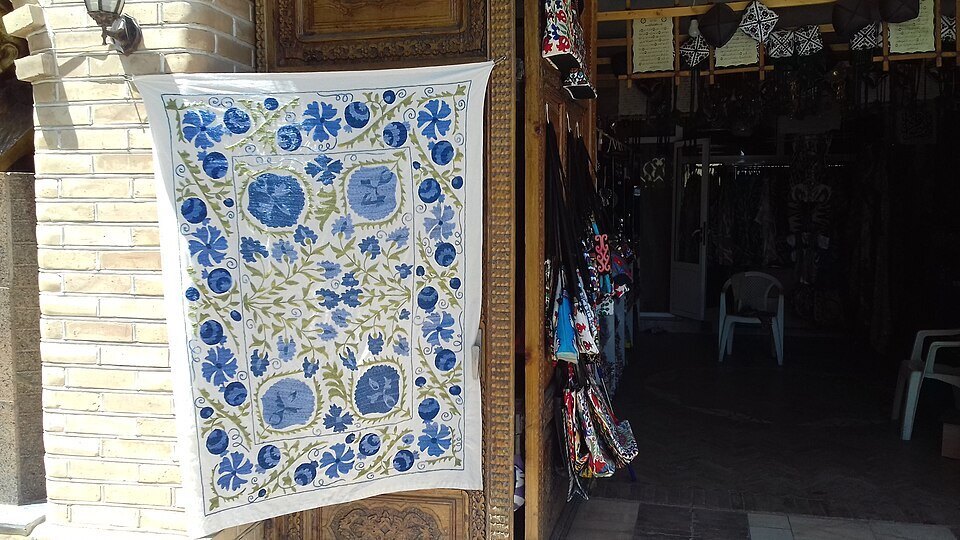
Cover image: Suzani embroidery and blue-and-white patterned crafts outside a Samarkand souvenir shop. Photo: Akhemen, Wikimedia Commons · CC BY-SA 4.0. Resized; the thumbnail may be cropped.
Sources and checks before travelling
Prepared on 26 October 2026. Suggested visit lengths are planning recommendations. Confirm current access, opening hours and tariffs with the operator for your visit date; dated price lists are identified in the text.
Read next
- All guides: Samarkand
- Your first trip to Samarkand: how to plan it
- The Registan: visiting the three madrasahs without rushing
This is a guide for independent travel. Sait Ablaev does not offer tours in this city.